Projects
- Real-World Bias in AI: Assessing and Mitigating Stereotypes in Multimodal Models [Link]
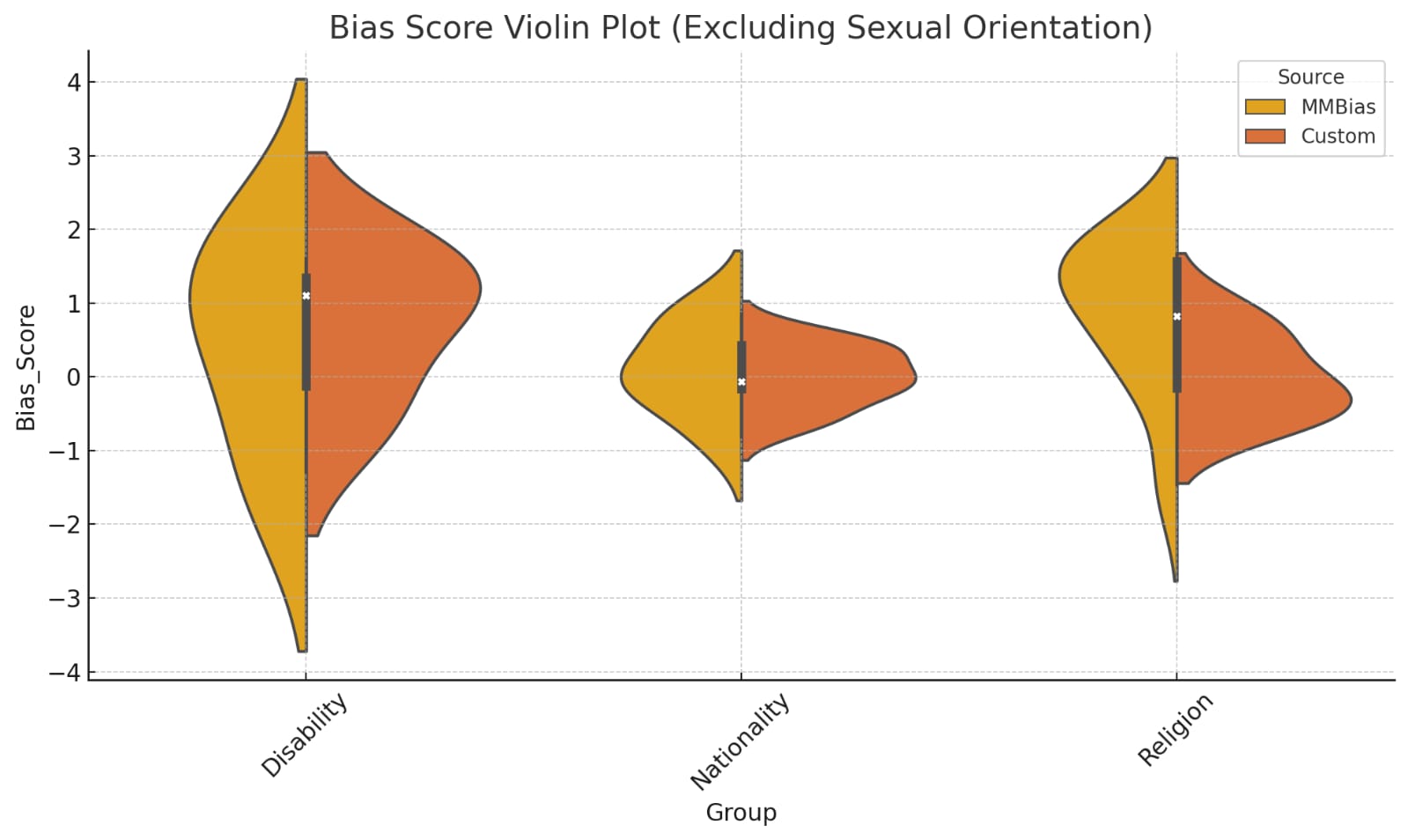
In this project, we investigated how real-world data impacts bias in multimodal AI systems, particularly focusing on OpenAI’s CLIP model. Unlike previous studies that rely on synthetic or highly curated datasets, we curated a novel dataset of 2,500 image-text pairs from platforms like Twitter, Reddit, CNN, and Unsplash, annotated across more than 20 demographic subgroups. We evaluated model bias using cosine similarity and Caliskan-style effect size calculations, uncovering nuanced and intersectional biases not captured by existing benchmarks like MMBias.
To address these biases, we implemented an adversarial fine-tuning technique that successfully reduced the magnitude of harmful associations across categories such as nationality, disability, religion, and sexual orientation. Our work not only exposes the limitations of benchmark datasets but also provides scalable methods for bias detection and mitigation in real-world AI deployments. This project contributes practical insights for building fairer and more inclusive vision-language systems.
- Chess Move Prediction Using Deep Learning Neural Networks
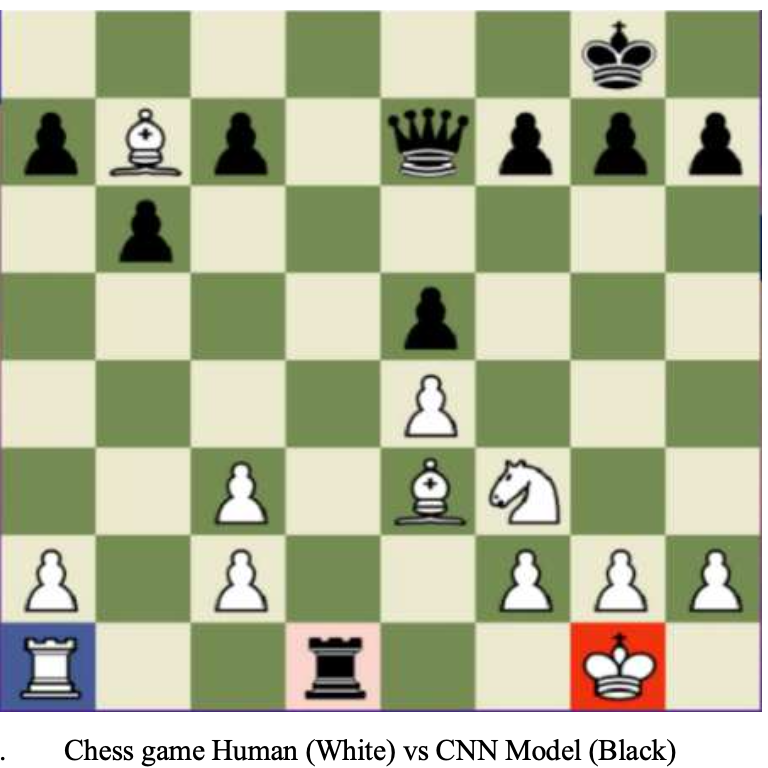
This project explores the use of Convolutional Neural Networks (CNNs) to predict chess moves and evaluate board positions. We trained our model on a dataset of 1.5 million board states, each encoded in an 8x8x14 representation to capture piece type, color, and attack positions. he CNN achieved a board evaluation accuracy of 39.16%—a strong result considering the complexity and vast possibility space of chess and was tested against the Stockfish chess engine to assess its gameplay performance.
The CNN-based model incorporated a Minimax algorithm to simulate optimal decision-making during gameplay. While it successfully identified tactical patterns like pins and forks, it struggled with deeper strategic planning, often prioritizing aggressive activity over positional safety. Despite limitations, the system showcased the potential of deep learning for real-time game evaluation and interaction. Future extensions can include integrating reinforcement learning to improve long-term strategy and adaptability through self-play.